
The Most Visited Market in Budapest. The Most Misunderstood.
Chef-led · Money-back guarantee · Monday–Saturday
Check Availability →Under 14 free · Ages 14–18 half price
All tastings, water & homemade pálinka included
It Used to Be a Market.
Then It Became a Sight.
The Great Market Hall has more or less always been a tourist attraction. But it was a market first — the largest, the grandest, the one Budapest showed off because it had every right to. Locals came here before work for a lángos. Some came just for a spritzer and a conversation. The stalls mainly catered to locals — butchers competing on meat, grocers in abundance, a spot for pumpkin, a separate one for strawberries. There were times when the surrounding areas spilled into a market, and the far end became a proper farmers' market.
Then came the crowds. Then came the money. And then came the slow hollowing out — the kind that doesn't happen overnight but one vendor at a time. Uncle Andrew, who used to source specialty groceries for my private chef clients, is gone. The farmers' market at the far end is completely gone. The grocery stall with the pumpkins from the twin sisters' family farm — still there, but not as a grocery stall anymore. A candy shop now. Stall by stall, what made this market worth caring about, what made locals frequent it, got replaced by what tourists want — not what locals need.
It became a bazaar. A compressed, hollowed-out, stereotypical version of itself — built for a photograph, not a meal. Something that was groomed rather than evolved. What was real and raw is now "authentic," polished and lost.
The people of Hungary never needed to rediscover their markets — we never lost them. The Great Market Hall didn't need reinventing. It needed protecting. Instead, it got monetized. Thankfully it's not just me. There are people who feel the same.
What's left is still worth knowing. The steak shop downstairs — some of the best in the city, run by the same people for the last thirteen years. My poultry ladies, same. The pickle family, keeping the traditions alive generation after generation, still making everything in-house. The strudel man who is more of a legend — the maestro who has been at his station longer than I've been running tours. I say that proudly on every single tour. The tablecloth vendor changed shops but not staff, another honest family vendor. The best survived. So far.
This tour is built around what's left — and why it matters. We pass the new "authentic" ones and stop for the ones that have been authentic long enough no one needs to state that.
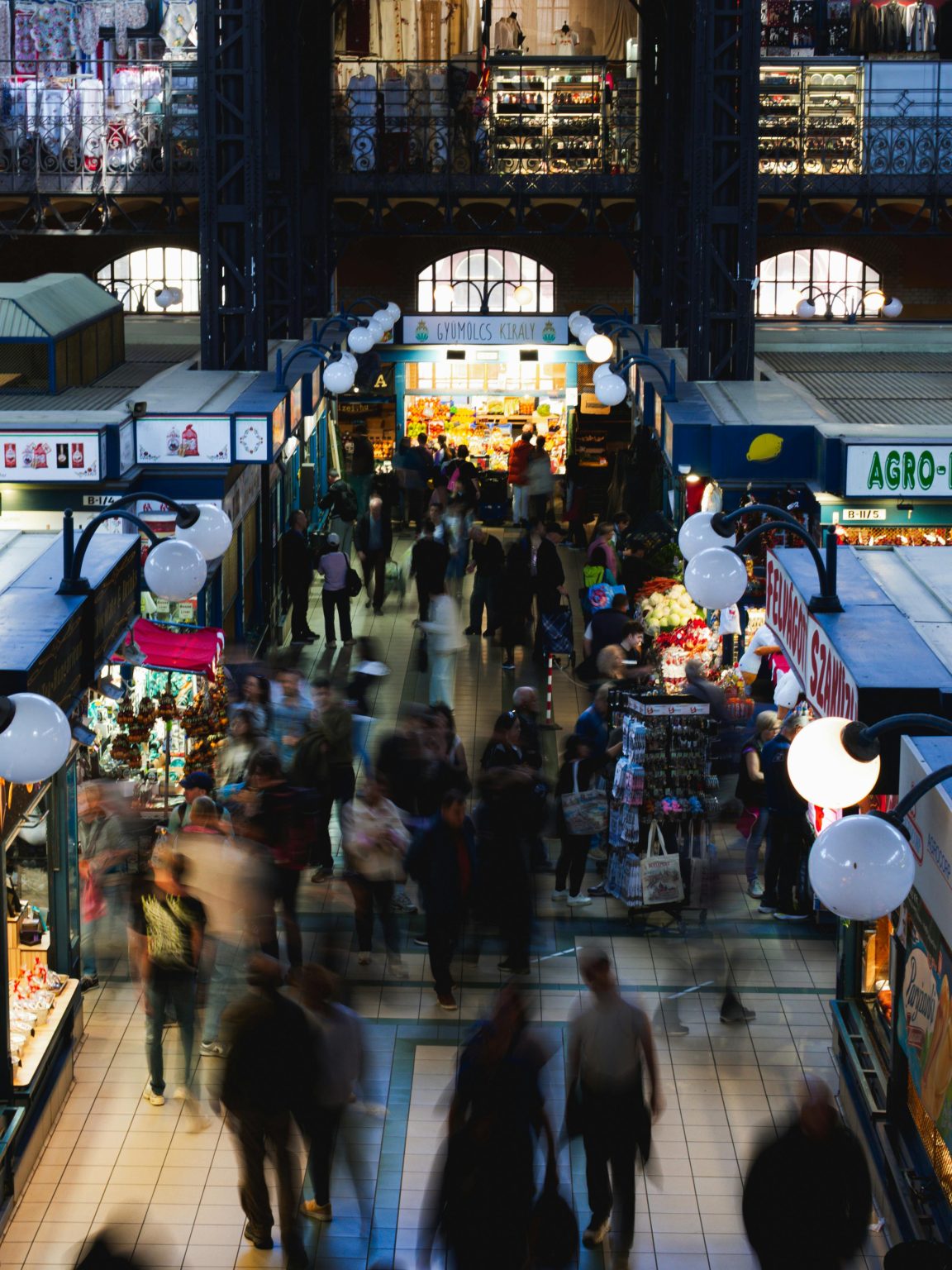
The Market Is Designed to Overwhelm.
That's Not an Accident.
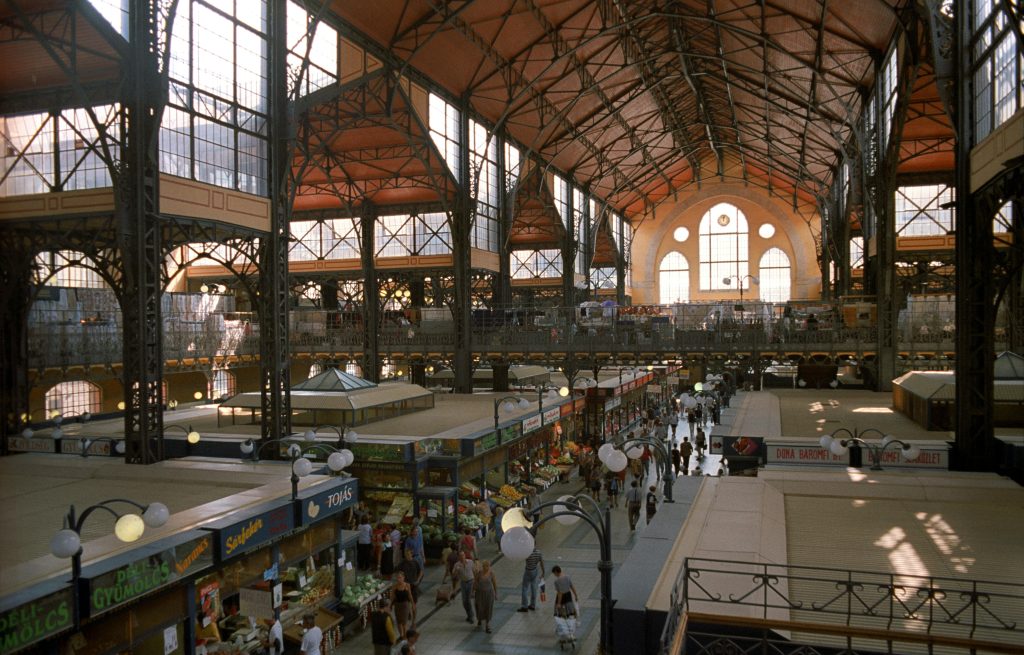
Three floors. Hundreds of vendors. A crowd that arrives by the busload after 10am. The Great Market Hall is not hard to navigate — it's hard to navigate well. Most people find the food on the second floor, buy something paprika-related, and leave having seen the market without really being in it.
That's not a failure of curiosity. The scale is genuinely disorienting, and when every stall is competing for attention at the same volume, the ones with the best product and the longest history tend to lose. They're not performing. They're just working.
I know which stalls have been here thirteen years and which ones appeared last spring. I know the poultry lady and the steak boys by name. I know where the farmers' market used to be and what replaced it — and why that story is worth telling. I know which lángos is worth eating and where the queue actually moves.
The tour isn't a rescue from the Great Market Hall. It's the version of it most people don't get to have — because most people go alone, without someone who's been watching this market change for over a decade.
You want to see and experience it. I can make sure the morning earns it, filter out the noise, and navigate through the chaos — because I have a system.
Here's a short video my Emmy-award-winning friends Jena and Micah from Wander the Map filmed during a winter tour — it gives you a feel for the atmosphere.
The Standards.
Everything Else Is a Surprise.
We start with lángos — fried dough, pulled from hot oil, eaten standing up, the way it was meant to be. Sour cream, cheese — that's it. Anything beyond that takes more away than it adds. I can live with red onions. Everything else is overkill. Hungarians have been grabbing this at lakes, festivals, and markets since the end of the war. It's not a tourist food. It just got adopted by tourists, the way everything good eventually does.
From there: sausages, pickles, strudel from the maestro. The pickles alone are worth the morning — the family behind that stall has been fermenting and jarring everything in-house long enough that the recipe isn't written down anywhere. It's just known.
The strudel man gets his own moment on every tour. Always. He's earned it.
There are other stops I don't publish. Not to be mysterious — because half the value of showing up is that you don't know what's coming next. Occasionally the market offers something I couldn't have planned. Those moments stay off the record too.
And yes — homemade pálinka. Distilled from fruit, brought by me, offered at whatever hour we get there. The Great Market Hall at 9am with a shot of pálinka is a more honest Budapest morning than most people get in a week.
A few things we taste I've never seen on another tour. I'd like to keep it that way.
Everyone Buys It Here.
Almost Nobody Buys the Right One.
The Great Market Hall is full of paprika. The quality varies more than the packaging suggests.
I take guests to one vendor. Not because it's the best paprika in Budapest — I'll be straight with you, the sweet paprika I really trust is not available at the market. The smoked one is. It comes in a paper bag from Szeged and is genuinely difficult to get through US customs. What you can buy here is good enough that I'm comfortable recommending it. Whether you want to hunt down my preferred source after the tour or leave with something reliable in hand — that's your call, and either one is fine.
What I can tell you is what you're actually holding, what the difference is between paprika worth cooking with and paprika worth leaving on a shelf. Most of what's sold here falls into the second category. We won't be stopping at those stalls.
There's an article on my site that goes deeper into the science and the history, if you want it after the tour. On the day, I'll keep it practical.
You Came Here Anyway.
Let's Make It Worth It.
The Great Market Hall draws everyone. That's fine. What matters is what you're looking for when you walk through the door.
If you want someone to point you toward the best keychain stall or confirm that you're having an authentic experience — I'm the wrong guide, and I'd rather tell you now. I have opinions. Strong ones. That's not a performance, it's just how I work, and it's the only reason the tour is worth doing.
If you're the kind of person who wants to understand why a place became what it is — who's still worth stopping for and who replaced the people that used to matter — then you're exactly who this tour is built for. You'll walk past rows of paprika pyramids and plastic folk art, and I'll tell you exactly why we're walking past them. The noise is real. So is what's behind it.
This is not a tour that pretends the Great Market Hall is something it isn't. It's a tour that shows you what it still is — and why that's worth your morning.
If you want validation, a script, or the comfortable version — this isn't it. If strong opinions make you uncomfortable, I'm probably not your guide. There are plenty of tours that will tell you everything you see is authentic. I'm not one of them.
"Andrew was so friendly and knowledgeable. He spoke about food, the marketplace, and history as we visited booths and enjoyed a variety of food. So much fun!"
Everything You Need
Before You Book
€59/person private (2–4 guests)
€54/person private (4–8 guests)
€49/person private (8–12 guests)
Under 14 free · Ages 14–18 half price · No group discounts
Non-refundable within 24 hours
If you don't leave satisfied, you don't pay.
No forms. No awkwardness.
Some people do this on their last day. They leave thinking it was great. They have no idea what they missed. Do it on day one. Everything that follows - every market, every meal, every label you pick up - lands with context instead of noise, in Budapest and beyond. You'll go to a market and know exactly what to buy and why. You'll sit down to goulash and understand what you're eating. You'll pick up paprika and know how to read the label. One guest followed a market recommendation, bought the salami I pointed her toward - said it was some of the best she'd ever had. The earlier in your trip you do this, the more times it pays off.
The Tour Ends.
The Story Doesn't.
You'll leave with a full stomach and a different map of Budapest in your head — not the tourist one, the real one. The Great Market Hall will still be there, still full of noise and paprika pyramids and crowds arriving by the busload. But you'll know where to look and who's still worth stopping for. That doesn't go away.
You'll get a follow-up email with everything we tasted so you can stay present during the walk instead of taking notes. If something sparks a question three months from now — a recipe, a vendor, something you can't stop thinking about — you have my email.
Most people leave the Great Market Hall having seen it. You'll leave having understood it. That's a different thing entirely.
Chefs don't just feed you. We teach you how to taste.
Come curious.
I'll handle the rest.
You're going to the Great Market Hall anyway. The question is which version of it you get.
Check Availability & Book Your SpotAlso available: Lehel Market Chef's Tour · Three-Market Deep Dive
Questions
Worth Asking
Absolutely — it's one of the most magnificent buildings in Budapest, and that alone earns its reputation. It also draws crowds, and parts of it are built for tourists rather than locals. That's exactly why having a guide matters. I've been navigating this market since 2013 — I know which stalls are worth your time, which ones to walk straight past, and how to route through it so you eat well without overpaying.
The market is touristy. The tour isn't. I'll help you see past the noise, find what's genuinely worth your time, and understand why certain things disappeared and what survived. That's a different experience than walking in alone.
The honest answer: without a guide, you're mostly guessing. You can follow the usual advice — confirm prices, avoid laminated photo menus — but even experienced travellers get caught out. The Great Market Hall is designed to be overwhelming. I know exactly which stalls to avoid, which ones are worth every forint, and how to route through it so you don't have a single bad surprise.
Yes — and it goes deeper than picking the right bag. We cover what the grades actually mean, what good paprika looks and smells like, and which stalls at the Great Market Hall I'd buy from. You'll leave knowing what you're holding and whether it's worth cooking with. There's also an article on my site that goes into the full science and history if you want it after the tour.
Very little or none. You'll be full by the end — that's the point.
Yes. Private tours are available for groups of 2–12. Pricing varies by group size — all options are in the practicalities section above.