Everything you need to know about Hungarian paprika

In Part Two I discuss how paprika is made, why is it so famous, its health benefits and also the best ways to use paprika.

In Part one I discussed its history and origin. You will also find the answers to what types of are paprika are there, and how to buy paprika.

Your trip to Budapest can get even more interesting. Transform your Budapest adventure into an unforgettable experience with my exclusive market and food tours. Join me for a private or small group tour of two of Budapest’s most vibrant markets. Discover hidden gems, savor local flavors, and immerse yourself in the city’s rich culture. Let me be your guide to an authentic Budapest experience! I offer private and small group market and food tours. You can read more about here or you can book the experience here.

Production

The southern part of the country where most of the paprika growing happens has around 2000-2100 hours of sunshine per year. Harvest is usually in September before the first frost. They harvest only the red ones and usually on three occasions. After harvest they let it ripen either in crates or hung up. Once it’s ready to process they wash it then dry. In the old days the drying was done by hanging up the peppers under the roof of the porch. Once the peppers are dried enough, they crack them and then grind them. Once the grinding is done, they set the moisture content. Then they rest them. After that they heat treat it to get rid of any microbes before packing.

In the old days most peppers were hot. The way they got rid of the heat is that they cracked the peppers. Then removed the seeds, veins and dried them separately. Once both dried they then mixed them to the desired heat level.
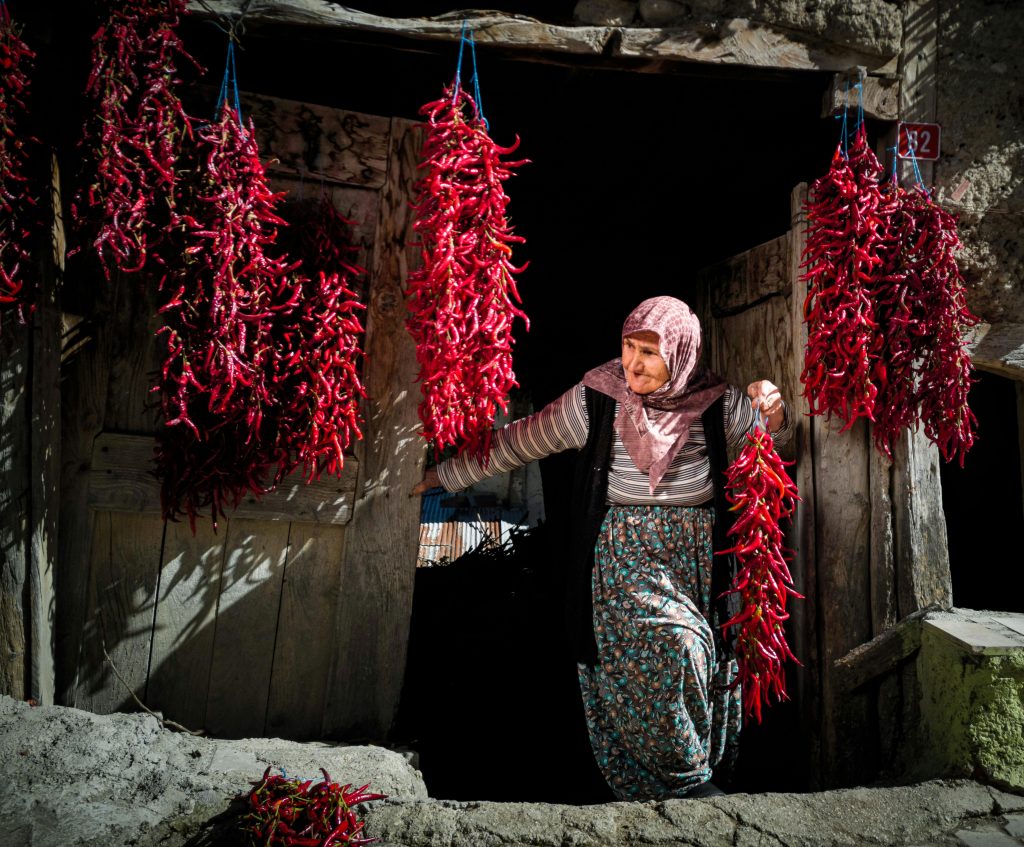
Drying Peppers (Pexels-Betul-Simsek)

Why is Hungarian paprika so famous?

According to legend, Hungarians were the first to use paprika and only the paprika as a stand alone spice. It is also rumored that Hungarians were the first ones that actually ground the peppers to a fine powder. Creating what we know now as paprika.

An experimental paprika lab was established in Kalocsa and Szeged. Vitéz Horváth Ferenc who at the time was leading the lab in Kalocsa, in 1928 accidentally selected a non spicy plant from a spicy one. He then cultivated it. From this point we have paprika peppers that have no spice. It also meant that the previously tedious process of removing seeds and veins could be skipped. The labs are still working both in Szeged and Kalocsa. They still breed better, higher quality peppers. A few of the most common actual breeds from Szeged that are grown for paprika are: Bíbor, Bolero, Délibáb, Fesztivál, Kárminvörös, Napfény, Rubinvörös, Szegedi F-03, Szegedi 178, Szegedi 80 and Viktória.

It is also rumored that Hungarian farmers were the ones who discovered that paprika dissolves in fat. Once its dissolved it has fantastic flavor and the fat-paprika-onion trinity is a great base for basically any dish. 

Albert Szent-Györgyi who received a Nobel prize for discovering vitamin C isolated it from a pepper seed that was grown around Szeged.
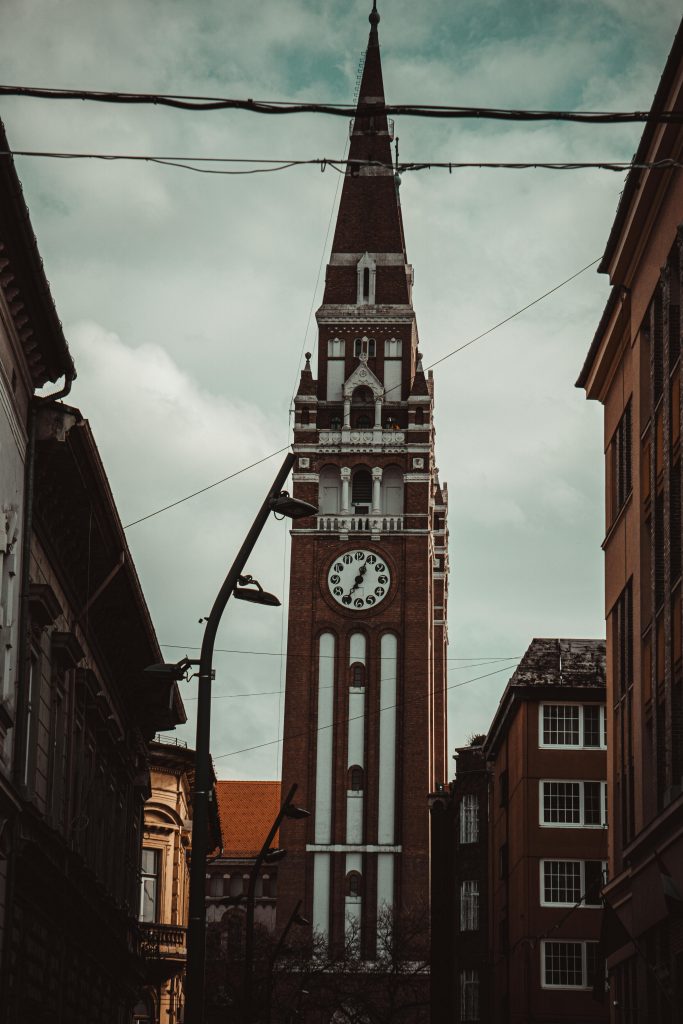
Szeged (Pexels Vargaphotography)

Health benefits

Paprika peppers contain more vitamin C than a lemon. That also explains why they looked at it not just as a spice but as a medicine. It was widely used during the 1830s’ cholera outbreak. The heat that we actually sense rather than taste comes from a chemical called capsaicin. It is an effective painkiller. It has anti-inflammatory properties as well. It also preserves well when putting it with some salt and vinegar, or as some old recipes suggest. There is a sort of fermented version of it as well. It calls for taking out the core and salt the inside til it looks like it snowed on it. Then put them in each other then in a jar with a tight fitting lid. It will keep well in the winter months while maintaining its high level of vitamin C. It is also proven that it can help with digestion since capsaicin irritates the stomach’s lining which in return produces more acid.

Uses

Paprika is indispensable in Hungarian cooking, adding flavor, color and aroma to a wide range of dishes. Some of the most famous Hungarian dishes featuring paprika include:

  • Gulyás (Goulash): A hearty soup made with meat, vegetables and a generous amount of paprika.
  • Pörkölt (Stew): A slow-cooked meat stew seasoned with paprika.
  • Paprikás csirke (Chicken Paprikash): Chicken cooked in a creamy paprika sauce.
  • Lecsó: A vegetable stew made with peppers, tomatoes, onions and paprika. 
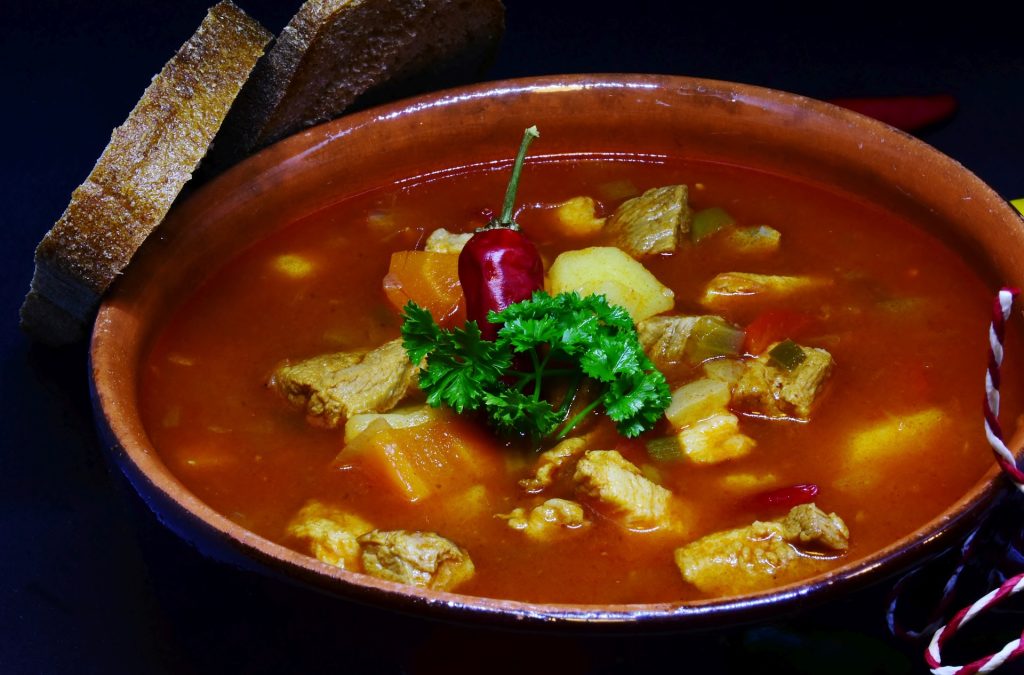
Goulash

Hungarian paprika is a spice that embodies the essence of Hungary’s culinary traditions and cultural heritage. Its rich history, diverse uses and unique flavor profile make it a special ingredient. It’s cherished by chefs and home cooks alike. Whether you’re making a traditional Hungarian dish or experimenting with new recipes, Hungarian paprika is sure to add a touch of authenticity and flavor.

You can read part one here
Everything you need to know about Hungarian paprika

In Part one I discuss its history and origin. You will also find the answers to what types of paprika are there, and how to buy paprika.

Your trip to Budapest can get even more interesting. Transform your Budapest adventure into an unforgettable experience with my exclusive market and food tours. Join me for a private or small group tour of two of Budapest’s most vibrant markets. Discover hidden gems, savor local flavors, and immerse yourself in the city’s rich culture. Let me be your guide to an authentic Budapest experience! I offer private and small group market and food tours. You can read more about here or you can book the experience here.

Hungarian paprika is more than just a spice; it is a symbol of national pride and an essential ingredient in Hungarian cuisine. Known for its vibrant red color and distinctive flavor, Hungarian paprika has a rich history and a variety of uses that makes it unique. In this article I will refer to pepper as the fruit of Capsicum annuum. Paprika is the dried, powdered spice that is made from said peppers. Black pepper is referred to as black pepper.

History and Origin

Paprika is derived from the dried and ground pods of the Capsicum annuum plant. All peppers are either Capsicum annuum or Capsicum frutescens. The latter is usually referred to as Tabasco peppers but they are not only those. Due to the extremely large variety of peppers some experts are considering all peppers to be capsicum annuum. They are just bred differently while, botanically speaking, the species have some different characteristics. Here are some, to name a few: Capsicum A. is usually 1-3 feet tall, while Capsicum F. is 3-4 feet tall. Capsicum A. produces a wide variety of fruit shapes and sizes, Capsicum F. produces smaller, more elongated peppers. While Capsicum A. can be anything from sweet to mild to hot, Capsicum F. ranges from mild to extremely hot.

Paprika (Pexels Eva Bronzini)

Pepper was introduced to Europe by Spanish explorers following Christopher Columbus’s voyages to the Americas. It arrived in Hungary through the Turkish during their occupation in the 16th century, as an ornamental plant. Records show that by the mid 18th century workers around Szeged were “were partially paid” in paprika. It wasn’t until the late 18th century that it pops up for the first time in a cookbook, in a recipe called “paprikás hús”, meat with paprika. The Turkish and the Napoleonic blocades really helped propel paprika to the European stage. It was a great alternative to black pepper. Then the cholera outbreaks of the 1830s further strengthened the plant’s role in everyday cooking and consumption. By the end of the 1800s it had completely transformed Hungarian cuisine.

The main reason the Turkish theory is the most plausible is that for a long time paprika wasn’t called paprika but it was called turkish pepper (törökbors). Over time, it transitioned from ornamental to a staple in Hungarian kitchens. Particularly among the lower classes who found it as a cheaper alternative to black pepper. What seems to be certain is that the rise of paprika is around the time when the supply of black pepper plummeted. The first paprika producing region in Hungary was around Szeged. Later the surrounding region of Kalocsa also joined the trend. It also helped that in 1850 Hungary had to adapt the Austrian (Habsburg) tobacco “monopoly”.It made tobacco farming a state monopoly and so cultivating it required permits. Since tobacco and paprika production require similar climate, soil and processing techniques, most farmers switched to growing peppers instead of tobacco. By the turn of the 20th century paprika was grown all over the southern regions. By then (late 19th century) commercial production was already happening in the two regions mentioned above. 

There are a few words Hungary gifted the world and one of them is paprika. The most widely accepted view is that it originated from the slavic word for pepper  peperi/piper/peperke/piperke, meaning “pepperlet”. The locals around Szeged however had their own theory. Based on this, paprika actually means “something that makes the priests cry”: papríkató, where “pap” means priest and the word ”rí” means cry. It could make sense since paprika was grown in the gardens of the monks of the Order of Friars Minor in Szeged. It is however most definitely nothing more than a nice tale.

Dried peppers (pexels yogendras)

Types

Hungarian paprika is legally categorized, based on quality, into these categories:

  • Különleges (special quality): Mild and sweet, with a bright red color. Highest quality (I. osztály).
  • Csemege (deli): 2nd in quality (II. osztály).
  • Édesnemes (noble sweet): The most common variety, slightly pungent and sweet, most common abroad (III. osztály).
  • Rózsa (rose): Mild with a light red to light brown color (IV. osztály).

While it’s not common in Hungarian cooking, there are smoked versions available. Most of the time, you’ll either find sweet or hot from either Szeged or Kalocsa.

If the paprika has less than 100 mg/kg capsaicin, it’s called “édes” or “csípősségmentes” (sweet).

If the paprika has between 100-200 mg/kg capsaicin, it’s called “enyhén csípős” (mild).

If the paprika has more than 200 mg/kg capsaicin, it’s called “csípős” (hot).

How to buy paprika? What to look for?

Most paprika will only have a description in Hungarian. One of the most important things to know is whether it’s hot or not. “Csípős” means hot, while “édes” means sweet. As you saw it above, there are types that are called “csípősségmentes” which means without the spice. 

The other important thing is that the paprika you buy in Hungary should be Hungarian. The EU puts geographical indications on foods and drinks. These are either P.D.O. (Protected Designations of Origins), which means that the raw ingredients need to come from the region of origin where all steps of production need to take place. It’s usually marked with a red stamp, and that’s what you want.

Wikipedia

P.D.I. (Protected Geographical Indications) means that at least one of the stages of production, processing or preparation takes place in the region. You can usually see a blue stamp marking this.

The other tell-tale sign is if you see percentages on the packaging. It highly likely means that they mixed the Hungarian paprika with paprika from other countries, usually China and or Spain.

You can read part two here.

Budapest Market Tour
Privacy Overview

This website uses cookies so that we can provide you with the best user experience possible. Cookie information is stored in your browser and performs functions such as recognising you when you return to our website and helping our team to understand which sections of the website you find most interesting and useful.